

US spot bitcoin ETFs took in $986.9 million of net inflows in the week ended September 4, extending the ETF inflow streak to three consecutive positive weeks. That lifts the three-week total to $3.8 billion and follows $924.5 million the week before, so the pace is building rather than fading. BlackRock’s IBIT absorbed $691.5 million of the weekly total, which is a concentration ratio worth reading carefully. Trading volume told a different story, falling to $14.5 billion from close to $19 billion the prior week.
The Read
- Three straight positive weeks put $3.8B into US spot bitcoin funds, with $986.9M in the latest.
- IBIT captured 70% of the week’s net inflow while aggregate volume fell by roughly a quarter.
- September rate-hike odds sliding to 48% removes the macro brake that capped the last two attempts.
Get This Analysis Summarized by AI
ChatGPTUpdate, September 29. The streak did not reach a fourth week. US spot bitcoin ETFs recorded $462.7 million of net outflows for the week of September 8 to 11, with bitcoin trading near $77,900 after failing to hold above $80,000. The sharpest single-session pull came Thursday, when the funds lost $282.7 million, their largest daily outflow since July. ARK 21Shares led the outflows at $234.2 million, ahead of Grayscale’s $129.1 million and BlackRock’s $52.5 million. The reversal followed a hotter-than-expected core CPI print on September 11, the exact trigger this article flagged as capable of reversing the setup.
A $3.8 Billion Run Rebuilds What August Took Back
The week ended September 4 delivered $986.9 million of net inflows across US spot bitcoin ETFs, a third consecutive week in positive territory. Sequentially that is a step up from $924.5 million, modest in percentage terms but directionally intact.
Inside the week sat a standout session. Thursday produced $731 million in a single day, the largest daily inflow since January 14. A print like that reads either as one large allocator clearing a mandate, which is durable, or as a single tactical entry that reverses within a fortnight, which is not.
The monthly frame gives the run its context. August closed as the strongest month since September 2025 with $3.5 billion in aggregate inflows, and bitcoin itself gained 24% over the month, its best since November 2024. The current streak extends something already working, rather than rebounding off a low base.
Set against the year, the recovery looks sharper still. The same complex printed $4.37 billion of outflows as IBIT and FBTC bled in June, and a weekly inflow of $205M in July marked an all-time low. Three weeks at this pace recovers most of what the summer took out.
Precision matters on what this bitcoin ETF inflow streak actually measures. It is a net creation figure, so it nets redemptions against subscriptions rather than measuring gross buying. A quiet week with few redemptions can therefore look stronger than a busy week with heavy two-way flow.

Concentration in IBIT Points to Allocation Over Tactics
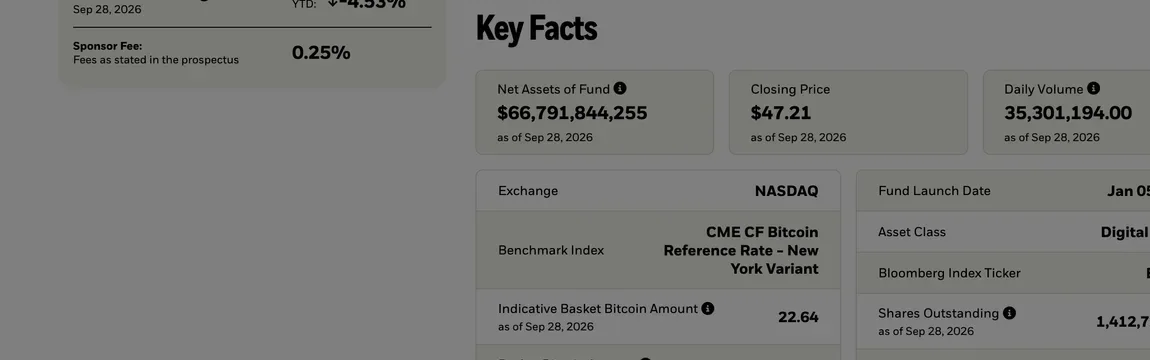
IBIT took $691.5 million of the $986.9 million, close to 70% of the complex’s net intake. BlackRock’s fund reported net assets of $62,524,453,295 as of September 4 on the iShares product page BlackRock publishes daily.
That concentration carries a specific read. Money routed through the largest, most liquid wrapper is usually mandate-driven allocation flowing down a platform’s approved list. Tactical money spreads across cheaper or more nimble vehicles to chase basis and borrow. The bear reading is less flattering: one dominant fund taking seven dollars in ten also means the bid rests on a narrow base of decision makers.
The volume figure is the detail most flow recaps skip. Turnover fell to $14.5 billion from nearly $19 billion, roughly a quarter lower, while net creations rose. Falling volume against rising net creation means fewer participants moving larger tickets, which supports the allocation read and simultaneously thins the exit.
A precedent is worth holding alongside this ETF inflow streak. IBIT pulled $693M of a week’s ETF inflows in August on a near-identical concentration profile, which makes this less an outlier than a structural feature of how the complex now takes money.
Also on CFinance:
- South Korea Clears Tokenized Securities for 2027
- Bitcoin ETFs Pull In $101M as Ether Snaps a 12-Day Streak
- Kraken Lists SoFiUSD and Opens 24/7 Dollar Settlement
A Softer Fed Path Clears the Way to a Fourth Week of the ETF Inflow Streak
Macro conditions have loosened their brake. Odds of a September rate hike fell to 48% from nearly 70% a day earlier after Fed Governor Chris Waller said he would favour holding policy steady if the coming CPI print came in acceptable.
That repricing matters more than it looks. The last two attempts at a sustained inflow run stalled on hawkish repricing rather than on crypto-specific news. Removing the hike from the base case turns a discretionary allocation decision into a cheaper one to sign off.
The catch-up argument reinforces the case for this ETF inflow streak. Crypto lagged other risk assets through the summer, and a complex that has trailed while equities ran tends to attract rebalancing flow mechanically once the macro overhang lifts. A third weekly gain in July arrived barely positive, where this one arrives with size behind it.
For the ETF inflow streak to reach four weeks the requirement is narrow and testable. The CPI print has to land soft enough to keep the hold in place, and IBIT has to keep clearing several hundred million without the rest of the complex going negative. Both conditions are observable within days, which makes this an unusually falsifiable setup.
Thin Turnover Is What Breaks It
The downside path for this ETF inflow streak runs through the same numbers that support the bull case. A bid concentrated in one wrapper, on a quarter less turnover, is a bid with a narrow exit. Should the allocators behind those tickets pause, there is no second layer of tactical demand underneath to absorb the gap.
A hot CPI reverses the setup directly. Hike odds have already swung 22 points in a single day, which shows how fast this repricing runs in both directions. The flow that arrived because a hold looked likely is the first to leave when it stops looking likely.
History argues for caution before extrapolating any ETF inflow streak. This complex has gone from $4.37 billion of quarterly outflows to a record-low weekly print to $3.5 billion in a month, inside a single year. Streaks here have been short and the reversals abrupt.
So the asymmetry an allocator has to price comes down to this. The bull case needs two things to keep happening that are already happening, while the bear case needs one thing to change that has changed twice this year on a single data release. Three weeks and $3.8 billion is real money and a genuine improvement in the bid, but it rests on a macro assumption with a published expiry date.
More to come.
About the Author





1 thought on “Bitcoin ETF Inflow Streak Hits Three Weeks at $3.8B”