The Magnificent Seven just had their worst day since April 2025, and the size of the move is the story. The group shed close to $800 billion in market value on Thursday, a 4.8% drop that leaves it 11% below its late-May peak and has now erased roughly $2 trillion from that top. The Roundhill Magnificent Seven ETF fell about 4.4% to its lowest level in nearly a month, its biggest single-day decline of the year. The trigger was not weak demand, it was capital spending, with Alphabet guiding capex as high as $205 billion and Tesla adding more than $25 billion of its own. Yet the tape was not uniform, because Intel ripped higher after hours on a clean beat while the capex-heavy names bled. This piece covers the scale of the drawdown, the capex mechanics behind it, the bull case hiding in the split, and the bear case if the derating extends.
The Read
- The Magnificent Seven lost close to $800B on Thursday, a 4.8% drop and their worst session since April 2025.
- The Roundhill Mag 7 ETF fell about 4.4%, its biggest single-day decline of the year, on AI capex fears.
- Intel beat and jumped 6% after hours, a split that shows the selloff is about spending, not the whole AI trade.
The Magnificent Seven Erase $800B in One Session
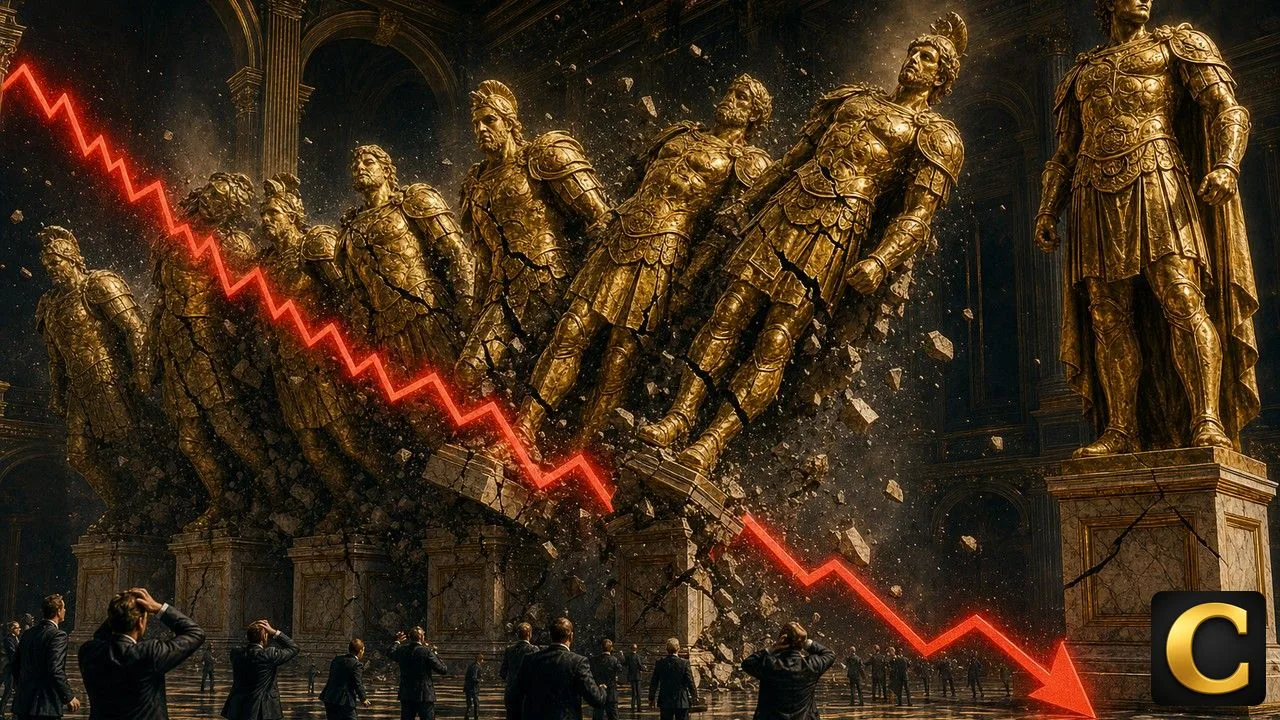
The damage was concentrated and it was fast. The seven megacaps lost close to $800 billion in a single day, a 4.8% decline that ranks as their worst session since April 2025. The Roundhill Magnificent Seven ETF fell roughly 4.4% to its lowest level in nearly a month.
Under the surface, the losses were lopsided. Tesla fell more than 13% and Alphabet dropped more than 6%, while Amazon lost over 4%, Meta shed more than 3% and Microsoft fell over 2%. Nvidia and Apple each slipped around 1%, so the pain sat squarely on the names that just guided spending higher.
The broad indices followed without breaking. The Nasdaq-100 proxy fell 1.8% and the S&P 500 proxy dropped 1.1%, while the Dow held up better at down 0.9%. The concentration in a handful of AI leaders is exactly why the group can erase $800B while the wider market only softens.
The move also has to be read against the year. Tesla is now down nearly 30% in 2026 and Microsoft off more than 20%, while Apple is still up roughly 18% and Nvidia up more than 12%. The selloff is a repricing of the spenders, not a verdict on every megacap, a nuance visible the day Tesla stock crashed 14% on its own capex guide.

AI Capex Without a Payback Window Is the Trigger
The catalyst is spending, not sales. Alphabet lifted its capital budget to as much as $205 billion for the year, and Tesla guided its own capex above $25 billion, both without a clear timeline for the return. When two of the largest companies in the world raise spending that hard with no payback window, the market reprices the whole cohort.
This is the same fault line that has run under the group all season. It was the driver the day Big Tech earnings landed with AI spending in focus, and it has returned each time a megacap guides spending higher without proof. Each print reminds investors that the capex is certain while the revenue from it is not.
The mechanics are simple and unforgiving. Rising capex compresses free cash flow now in exchange for a payoff that only shows up later, so the stock derates until the payoff becomes visible. The 11% drawdown from the May peak is the market marking down that uncertainty in real time.
Intel’s Beat Shows the Selloff Is Selective
The bull case lives in the split. On the same day the capex names cratered, Intel reported earnings per share of $0.42 versus a $0.21 estimate on revenue of $16.1 billion against a $14.43 billion forecast, and the stock jumped about 6% after hours. That is not a market fleeing technology, it is a market rewarding results and punishing promises.
The rotation has somewhere to go. Supermicro surged on a record backlog for AI servers, another sign that money is moving toward the parts of the AI build-out already showing revenue. A selloff that spares the earners and hits the spenders is a healthier tape than a blanket derating.
Positioning helps the bull too. A group that just erased $800B in a single session has flushed a lot of momentum length, and megacaps that survive a shock like this often re-rate quickly once one of them proves the capex converts. The bull case needs a single quarter where a big spender shows the return.
An 11% Drawdown From the May Peak Can Extend
The bear case is that the derating has further to run. The Magnificent Seven still carry the indices, and a group sitting 11% below its May peak after erasing $2 trillion can keep sliding if more names guide spending up without proof. Concentration cuts both ways, and it is now cutting down.
The macro backdrop offers no cushion. With capex fears already draining the leaders, any broader risk-off would hit the most crowded trade in the market first. It is the scenario value investors have warned about, the one Jeremy Grantham framed as an AI bubble waiting to burst.
The asymmetry is now the whole trade. On one side, a selective selloff that rewards earners like Intel and leaves room to rotate. On the other, a $2 trillion drawdown in the most concentrated leadership in market history, still spending into an unproven return. The Magnificent Seven did not break on Thursday. They just told investors the next leg depends on returns, not budgets.
More to come.
About the Author