
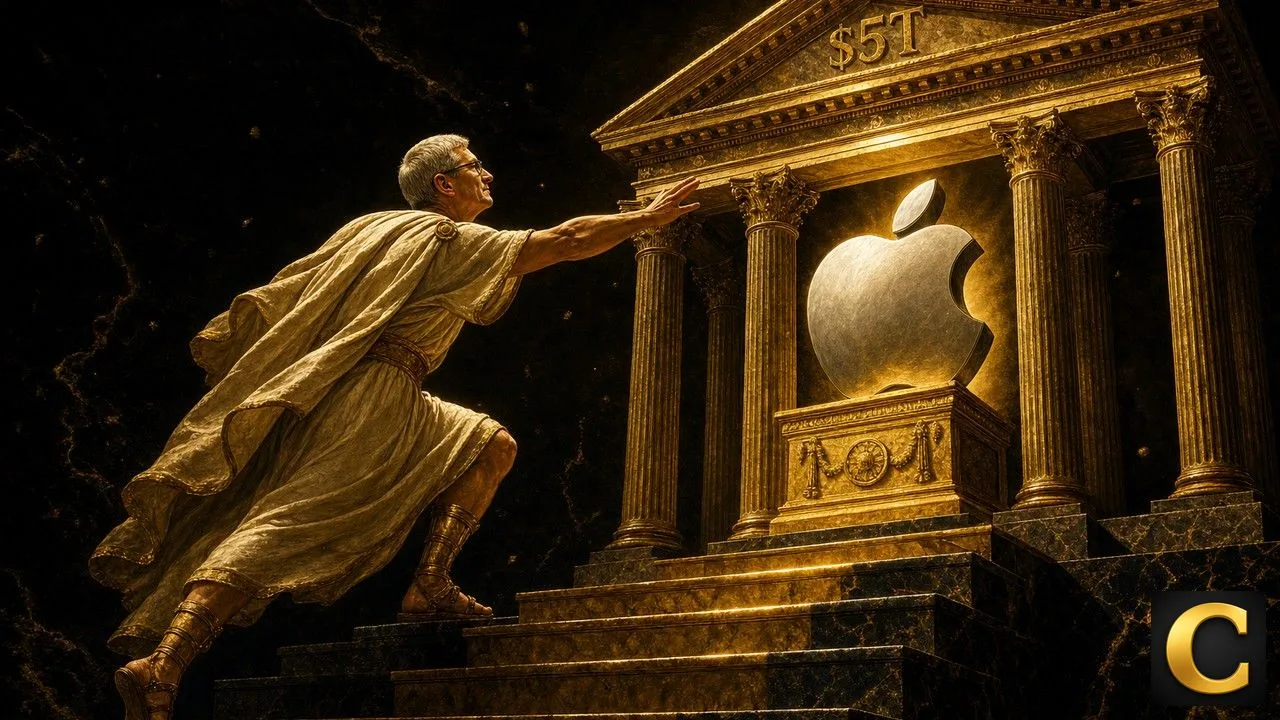
Apple stock ended Wednesday at an all-time closing high of $327.50, lifting its market value to about $4.81T. From here, a move of roughly 4%, to about $340 per share, would make Apple the second company in history to reach a $5T market cap, after Nvidia crossed the line during 2025’s AI-fueled surge. The setup rests on fundamentals that have been running hot since the spring. Fiscal second-quarter revenue rose 17% to $111.2B with earnings per share up 22%, and the services business printed another all-time record. This article covers the record close, the math and the March-quarter engine behind it, what keeps the bid alive, and the risks that could reopen the gap.
The Read
- Record close at $327.50 puts Apple’s market cap near $4.81T
- A 4% move to about $340 would unlock the $5T milestone
- Fiscal Q2: revenue $111.2B up 17%, EPS up 22%, services at a record $31B
A Record Close at $327.50 Puts the Milestone in Reach
The tape did the talking on Wednesday. Apple stock finished at $327.50, a record close, valuing the company at about $4.81T. Only one company has ever traded above $5T, and Apple now sits within a single strong week of joining it. The next few sessions decide whether the milestone becomes a headline or stays a target.
The milestone chase is a sequel. Earlier this month the story was the 4% gap separating Apple from Nvidia’s market cap. The finish line has moved from catching a rival to crossing a round number the market treats as a coronation.
The climb has been long by any measure. Apple crossed its first trillion in 2018, meaning the company has roughly quadrupled in eight years while already carrying a valuation larger than most national economies’ output when the run started.
Round numbers are not fundamentals, but they organize flows. Index-level attention, options positioning and headline momentum tend to cluster around thresholds like this one. The last 4% of a milestone run is rarely quiet.

The March Quarter Is the Engine Behind the Rerating
The move has earnings underneath it. In the fiscal second quarter ended March 28, revenue rose 17% year over year to $111.2B and diluted EPS climbed 22% to $2.01, with double-digit growth across every geographic segment and a March-quarter record for iPhone on demand for the iPhone 17 lineup.
Services set another all-time record at $31B in quarterly revenue, the high-margin layer that keeps compounding on top of the hardware base. The detail sits in the second-quarter results Apple published at the end of April.
Capital returns sweeten the math. The board authorized an additional $100B share repurchase program and lifted the dividend 4% to $0.27 per share, while the installed base of active devices reached a new all-time high.
The product engine keeps feeding that base. The quarter saw the introduction of the iPhone 17e and the M4-powered iPad Air alongside the MacBook Neo launch, broadening the hardware lineup that anchors the services flywheel.
Buybacks and a Record Installed Base Keep the Bid Alive
The bull case is mechanical as much as narrative. A $100B buyback shrinks the share count into strength, meaning the $340 threshold gets easier to clear over time even without multiple expansion. Apple stock has a standing buyer in its own treasury.
The club Apple is trying to join keeps getting more exclusive at the top. The gap between the handful of names generating elite free cash flow and the rest of the market was already the theme in the trillion-dollar stocks ranked by cash generation earlier this summer.
And the macro backdrop still leans friendly for the megacap complex, with the AI spending wave Nvidia expects to run through 2030 pulling the whole cohort’s earnings estimates higher. Apple is the cheapest ticket into that basket on a story-risk basis, if not on multiple. Positioning follows that logic, which is precisely what makes it crowded.
An OpenAI Lawsuit and a Gap That Can Reopen
The bear case starts in a courtroom. Apple filed a trade-secret lawsuit against OpenAI on July 10, alleging coordinated extraction of confidential work by former employees around an AI-first smartphone project. Whatever the outcome, it confirms Apple now fights rivals for its own hardware franchise, not just for search deals.
The second risk is the mirror of the setup. A 4% gap in Apple stock closes fast, and it reopens faster. Milestone runs concentrate positioning, so one disappointing print unwinds weeks of drift, exactly because so much of the bid is anchored to the threshold rather than to new information.
The asymmetry to price: the fundamentals argue for patience, the positioning argues for speed. If the $5T print happens on momentum alone, the milestone becomes the risk event itself.
More to come.
About the Author