

The Wall Street Journal reported on Thursday that the Binance MiCA bid in Greece stalled after a phone call from the top of the European Central Bank, with the supervisory review still open at the time. Christine Lagarde reportedly asked Greek Prime Minister Kyriakos Mitsotakis not to approve the exchange’s application, even though Greece’s capital markets regulator had signalled it was ready to sign off. Binance withdrew the file in June, before a formal rejection and ahead of the July 1 MiCA transition deadline. The episode matters well beyond one exchange, because the ECB holds no licensing power over crypto-asset service providers under MiCA. For allocators, custodians and treasurers who route euro business through licensed venues, it raises a blunt question about how political the passport really is.
The Read
- Lagarde reportedly asked Greece’s prime minister to block the Binance MiCA licence.
- The ECB has no formal role in authorising crypto-asset service providers.
- Binance withdrew in June and plans to apply in another EU member state.
Get This Analysis Summarized by AI
ChatGPTLagarde Reportedly Called Athens Before the Binance MiCA Approval
Binance filed for a MiCA licence in Greece in January 2026, aiming for an authorisation it could passport across the European Union. By late May the approval looked close. Chief executive Richard Teng was reportedly preparing a trip to Athens to mark the licence with the Greek prime minister, and Greek officials had told the European Securities and Markets Authority in early June that the Hellenic Capital Market Commission intended to approve it.
Then the file stopped moving. A vice chair of the HCMC told Binance that Lagarde had asked Mitsotakis not to approve the application, and that the regulator could not proceed without his support. The request reportedly came from the ECB president in person, with the stated aim of delaying any decision until ESMA takes over licensing responsibilities.
Two concerns are attributed to Lagarde in the Binance MiCA file. The first is Binance’s compliance record, including its 2023 guilty plea in the United States. The second is scale: the world’s largest crypto exchange could deepen the use of dollar-based stablecoins in Europe, at a time when stablecoin supply has passed $270B with $30 trillion in annual volume, and undercut the ECB’s digital euro project along with euro-denominated alternatives. The same reporting says ESMA privately advised national regulators to reject Binance applications over its past compliance issues.
Binance pulled the Greek application in June, before any formal refusal, and said it would seek authorisation in another member state. Asked about the report, the exchange declined to comment on what it called speculation and insisted it remains committed to operating “on a long-term, compliant basis” under MiCA. The ECB and the HCMC both left the allegation itself unaddressed.

The ECB Holds No Licensing Power, Yet the File Stalled
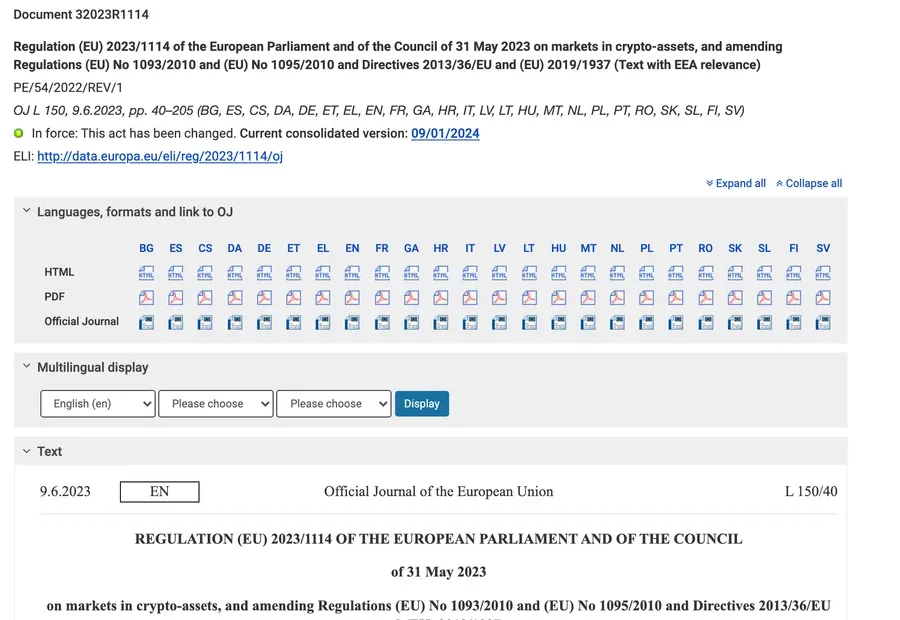
Here is why the report lands hard. Under the MiCA regulation published in the EU Official Journal, the authorisation of a crypto-asset service provider sits with the national competent authority of its home member state, in this case the HCMC. An ECB spokesperson noted that the central bank has no institutional role in authorising crypto-asset service providers, and pushed back on the idea that it had one here.
Lawyers consulted on the case read it two ways at once. Nothing in MiCA prevents the ECB from voicing an opinion to a national regulator, so an informal view is not a breach on its face. Yet a view relayed through the head of government, rather than through the supervisory channel, turns an opinion into a veto the rulebook never granted. The legal gap between advice and authority is exactly where this file got stuck.
The stablecoin angle explains the ECB’s interest. Binance controls roughly 65% of stablecoin reserves held on centralized exchanges, or $47.5B as of February. Lagarde has argued for regulated settlement systems over private stablecoins, a harder line than the Bank of England, which scrapped its £20k stablecoin holding cap, while US policy keeps widening the dollar-token market, now that the FDIC lets US banks issue their own stablecoins under the GENIUS Act.
Timing added pressure. The MiCA transitional period ended on July 1, which determined which firms could keep serving EU clients. A licence that slipped past that date meant the Binance MiCA file lost its clearest route to a passported presence at the moment the regime went fully live.
Also on CFinance:
- Tokenized Stocks Get a Five-Year SEC Exemption
- Bank of Japan Lifts Rates to 1.25%, a 31-Year High
- Clarity Act Passage Slips to 16% on Prediction Markets
An ESMA-Run Licence Could Take Politics Out of the Next Filing
The bull case for institutions starts with the reported motive itself. If the ECB’s aim was to wait for ESMA to take over licensing, then a centralised process would move large applications away from national capitals and into a single supervisor. MiCA is under review in what the market calls “MiCA 2.0”, and ESMA is the likely candidate for that role. One supervisor applying one standard is easier to price than 27 regulators exposed to phone calls.
Registry entries also show the regime working for the incumbents, which is what makes the Binance MiCA outcome stand out. Between June 26 and September 16, the number of banks on ESMA’s MiCA list doubled from about 40 to about 80, lifting their share of providers from roughly 17% to nearly 23%. The total count of listed crypto-asset service providers rose from 243 to 349 over the same period, led by German cooperative and commercial banks.
Banks enter through Article 60, which lets a licensed credit institution notify its home regulator at least 40 working days before offering crypto services, instead of seeking full CASP authorisation. Deutsche Bank expects its custody licence in October, covering bitcoin, ether and stablecoins such as USDC and EURC. For an allocator, that widens the bench of regulated European counterparties regardless of what happens to Binance.
Binance also keeps a path. It says it will file in another member state, and its Greek application had reportedly been deemed complete before the intervention. If a new home regulator authorises a second Binance MiCA request on the merits, the passport would still carry across the bloc.
Dollar Stablecoin Fears Could Keep Europe Shut to Binance
The bear case is that the Greek episode is a template rather than an accident. If the ECB views a large exchange mainly as a distribution channel for dollar stablecoins, the concern travels with the applicant to any member state it picks next. A second Binance MiCA application would face the same objection in a different capital.
A broader backdrop feeds that reading. Dollar tokens keep scaling while euro-denominated alternatives remain a policy project, and the ECB’s line stands out against the softer stance taken by other central banks.
For institutions, the practical risk sits in counterparty planning. The Binance MiCA file shows what that looks like in practice: a venue that cannot secure a MiCA passport cannot serve EU clients on a regulated basis, and ESMA’s reported advice against Binance applications suggests the objection is not limited to one official. Treasurers and allocators routing euro flows should assume that access for the largest offshore exchanges remains uncertain until a centralised licensing process is actually in place.
More to come.
About the Author