
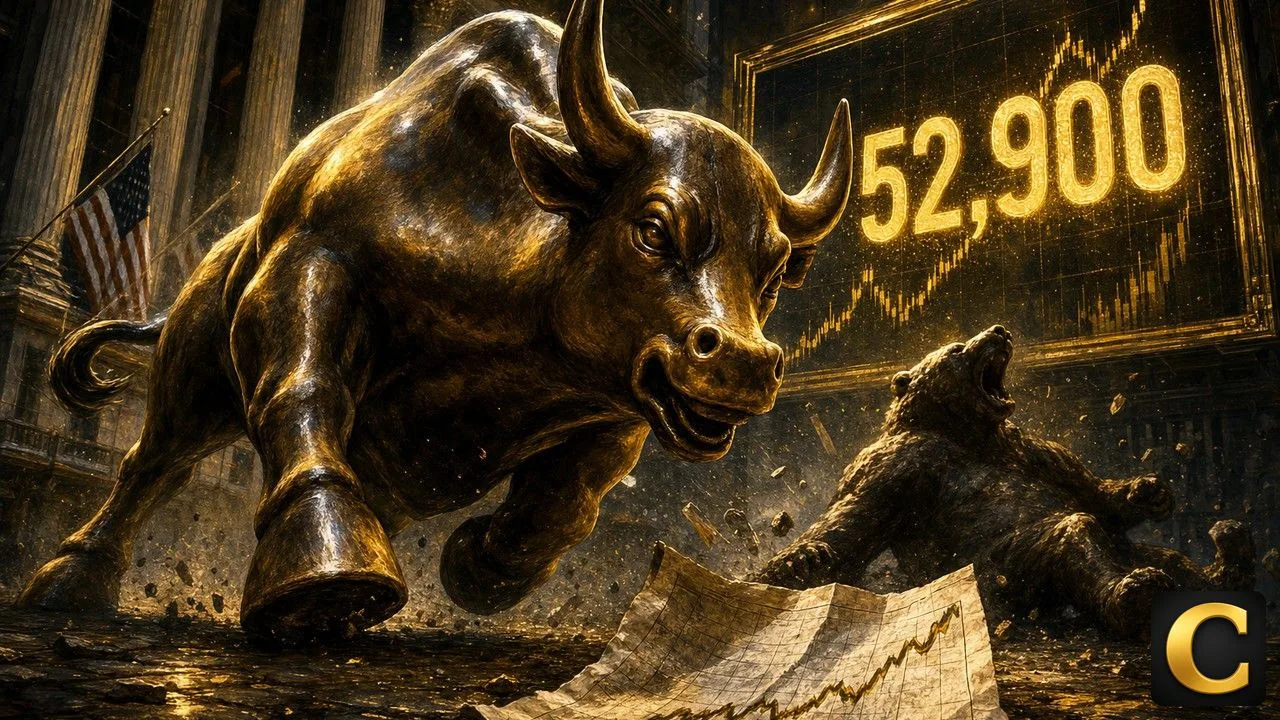
The Dow Jones Industrial Average rose 594.83 points (1.14%) to close at 52,900.07, a fresh all-time record, after June nonfarm payrolls came in at 57,000, well below the 113,000 consensus estimate. The unemployment rate ticked in at 4.2%, versus the 4.3% forecast. The soft jobs print broke a three-month streak of hot data and cooled expectations of a Fed rate hike at the September meeting. Odds of a September hike dropped to 55%, down from 64.1% before the report.
Key Takeaways
- Dow Jones closes at 52,900.07, up 594.83 points (+1.14%), a new all-time record.
- June payrolls print at 57,000, half of the 113,000 consensus estimate.
- September Fed hike odds fall to 55% from 64.1%, easing pressure on rate-sensitive assets.
The Dow-Nasdaq Split That Defined the Session
The story of July 2 is a tale of two indexes. The Dow Jones set a record, closing at 52,900.07 after adding 594.83 points. In the same session, the Nasdaq Composite fell 207.36 points (0.80%) to 25,832.67. The S&P 500 barely moved, finishing at 7,483.24 with a 0.01 point gain.
This divergence is what makes the print interesting. When the Dow rips and the Nasdaq bleeds on the same day, the market is telling you it is rotating from growth to value. Industrials, financials and defensive names in the Dow outperformed the mega-cap tech that dominates the Nasdaq weighting.
Tesla was one of the biggest drags on the Nasdaq, sliding 7% despite reporting delivery numbers that beat expectations. The stock’s weakness reflects concerns about margin compression and AI capex that the market is discounting despite the positive volume numbers. The semiconductor complex extended its selloff, with the South Korean Kospi dropping 7.9% overnight and dragging chip names lower in US trading.
The rotation is not a one-day event. It has been building for several sessions as investors question whether the AI trade can continue to pull disproportionate capital from other sectors. The Dow’s record close is the clearest sign yet that the money is looking for a different home, and the Nasdaq’s underperformance is the flip side of the same coin.

The Jobs Number That Changed the Rate Path
The June jobs report came in at 57,000 nonfarm payrolls, roughly half of the 113,000 consensus. The unemployment rate at 4.2% was slightly better than the 4.3% forecast, but the payrolls miss is what dominated the headline reaction. This is the softest print in three months, breaking a run of upside surprises that had been feeding Fed hike fears.
Fed Chair Kevin Warsh had already signaled a softer stance on inflation earlier in the week. The market was still handicapping a possible September hike based on labor market strength. This jobs print, coming below expectations by that margin, effectively removed the labor-side argument for a hike. Odds of a September hike collapsed to 55% from 64.1% within hours of the release. The rate path had already been in focus, with the Fed widely expected to hold on June 17.
The reaction pattern in bonds and rate-sensitive assets confirms the read. Treasury yields fell across the curve, banks and homebuilders rallied on the prospect of a slower rate path, and speculative tech got no bid despite the dovish takeaway. That final point matters. In a classic rally, dovish data would lift everything, including the Nasdaq. Here it did not, which reinforces the rotation thesis rather than a broad risk-on interpretation. This split shows up too in the Fed’s June 17 hold decision framework, where labor was the pivotal variable. For context, see our earlier piece on CFinance: Grantham Predicts AI Bubble Burst and Dismisses Bitcoin.
The bond market’s read is also worth flagging. The 10-year yield dropped several basis points on the print, and the 2-year yield fell more sharply, steepening the curve. That steepening pattern is historically associated with a rate cycle nearing its end, which is precisely what the Dow rally is pricing in.
What to Watch as the Market Reopens After the Holiday
US financial markets are closed on Friday, July 3, for the Fourth of July long weekend. Regular trading resumes on Monday, July 7. That break gives investors three full days to digest the jobs data before the next tape action, which historically extends the impact of a strong data print beyond the initial session reaction.
Monday’s session will also coincide with SpaceX joining the Nasdaq-100 index, which will trigger significant mechanical buying from index funds. This dynamic is fully spelled out in the note on how SpaceX priced its Nasdaq debut. The combination of a dovish macro backdrop and a large index inclusion could reset the Nasdaq’s momentum, or it could accelerate the existing rotation if funds sell existing tech to buy SpaceX at the margin. That inclusion triggered real flows, $4.3B in forced buying around SpaceX’s Nasdaq-100 debut.
The bank earnings season kicks off in two weeks, with JPMorgan, Wells Fargo, Citi and Goldman Sachs reporting mid-July. A dovish rate path is bullish for bank net interest margins over time but bearish in the near term for their preferred stock issuances. Traders will listen for CFO commentary on loan growth and deposit costs as the primary tell.
Bitcoin’s reaction to the jobs print was in line with risk assets: BTC climbed above $61,000 and looked constructive. The correlation with rate-sensitive equities remains high, and any further softening in labor data would likely support both risk complexes. The macro setup on bitcoin inflows collapsing on the AI trade suggests that a broad rotation away from AI-heavy tech could recycle capital back into crypto as the marginal beneficiary.
The bigger question is whether the July 2 print is a one-off or the start of a labor cooldown. If August payrolls confirm the softness, the Fed may be forced to cut before year-end rather than hold. That scenario would flip the market narrative from “how many hikes” to “how fast cuts” within a few weeks, which is precisely the setup the Dow’s record close is starting to price in.
More to come.
About the Author